PIVtools
The Complete Open-Source PIV Platform
Unified planar, stereoscopic, and ensemble PIV processing. GUI for setup, CLI for scale.
Why PIVtools?
Everything you need for professional PIV analysis in one unified, accessible platform.
Open Source
BSD 3-Clause licensed with a fully transparent codebase. Extend, modify, and contribute to the community.
Powerful GUI
Full-featured interface with real-time preview, interactive masking, and instant parameter feedback. No command line required.
Scalable Processing
Built on Dask for seamless scaling from laptop to HPC cluster. Process terabyte-scale datasets with ease.
Complete PIV Methods
Standard frame-pair, stereoscopic 3-component, and ensemble PIV all in one unified platform.
Ensemble Statistics
Direct Reynolds stress computation from correlation maps. Extract turbulence statistics with enhanced spatial resolution.
Reproducible Workflows
YAML configurations capture every parameter. Share, version, and reproduce analyses effortlessly.
Complete Processing Pipeline
From raw images to publication-ready results. Every stage of the PIV workflow, integrated and accessible.
Image Loading & Preprocessing
Multi-Format Support
TIFF, PNG, LaVision .im7/.set, Phantom .cine
Spatial Filters
Gaussian smoothing, sliding minimum, local normalisation
Temporal Filters
POD-based background removal, temporal minimum
Polygon Masking
Interactive GUI-drawn exclusion regions
PIV Processing
Frame-Pair PIV
Multi-pass with window deformation and sub-pixel fitting
Stereo PIV
3-component velocity from calibrated multi-camera setups
Ensemble PIV
Correlation averaging with single-pixel resolution capability
GUI & CLI
Run from either interface — configure visually or execute headlessly
Calibration & Merging
Scale Calibration
Simple scale factor and timestep for planar PIV
Camera Calibration
Full calibration with distortion correction using ChArUco boards or dot patterns
Stereo Reconstruction
3D velocity field from multiple camera views
Field Merging
Hanning-window weighted multi-camera stitching
Analysis & Export
Statistics
Mean, RMS, vorticity, and Reynolds stress computation
Interactive Viewer
Explore all quantities with custom colourmaps and playback
Video Generation
FFmpeg-powered publication-ready animations
Transform Data
Convert velocity fields to your conventions and coordinate systems
Flexible Workflow
Configure visually in the GUI, run at scale via CLI. One configuration, multiple execution modes.
Modern GUI
Configure interactively with real-time preview
YAML Config
Shareable and reproducible settings
CLI / HPC
Scale to clusters without modification
# Install PIVtools
$ pip install pivtools

# Launch GUI for interactive configuration
$ pivtools-gui

# Or use CLI: init config, then run
$ pivtools-cli init && pivtools-cli instantaneous
The GUI and CLI share the same configuration file. Changes made in the GUI are immediately available for CLI execution.
Get Started in Minutes
From installation to your first PIV analysis in three simple steps.
Install
pip install pivtoolsInstall from PyPI with all dependencies
Launch GUI
pivtools-guiStart the interactive GUI
Or Use CLI
pivtools-cli initInitialize config, then run processing
Comprehensive Manual
Explore detailed guides on image configuration, masking, preprocessing, PIV processing modes, calibration, and more in the complete documentation.
Cite PIVtools
If you use PIVtools in your research, please cite our work:
“PIVtools: A Unified Open Source Platform for Particle Image Velocimetry (PIV) Analysis”
University of Southampton (2026) — Paper coming soon
Show BibTeX
@article{pivtools2026,
  title={PIVtools: A Unified Open Source Platform for Particle Image Velocimetry (PIV) Analysis},
  author={Author, A. and Author, B. and Author, C.},
  journal={University of Southampton},
  year={2026},
  note={Paper coming soon}
}
Meet the Team
PIVtools is developed by researchers at the University of Southampton, combining expertise in fluid dynamics, image processing, and scientific software development.

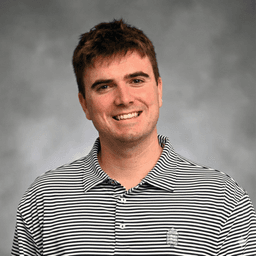
Dr John Lawson
Lecturer
Department of Aeronautics and Astronautics
Lecturer in the Aeronautics and Astronautics Department within the Faculty of Engineering and Physical Sciences. Specialises in experimental fluid mechanics, turbulence and particle laden flows.

Prof. Bharath Ganapathisubramani
Professor of Experimental Fluid Mechanics
Department of Aeronautics and Astronautics
Professor of Experimental Fluid Mechanics at the University of Southampton. His team's research takes an experimental approach to understanding aerodynamic and hydrodynamic phenomena.
University of Southampton
Part of the Faculty of Engineering and Physical Sciences, our research group focuses on advancing computational methods for fluid dynamics and developing open-source tools for the research community.